

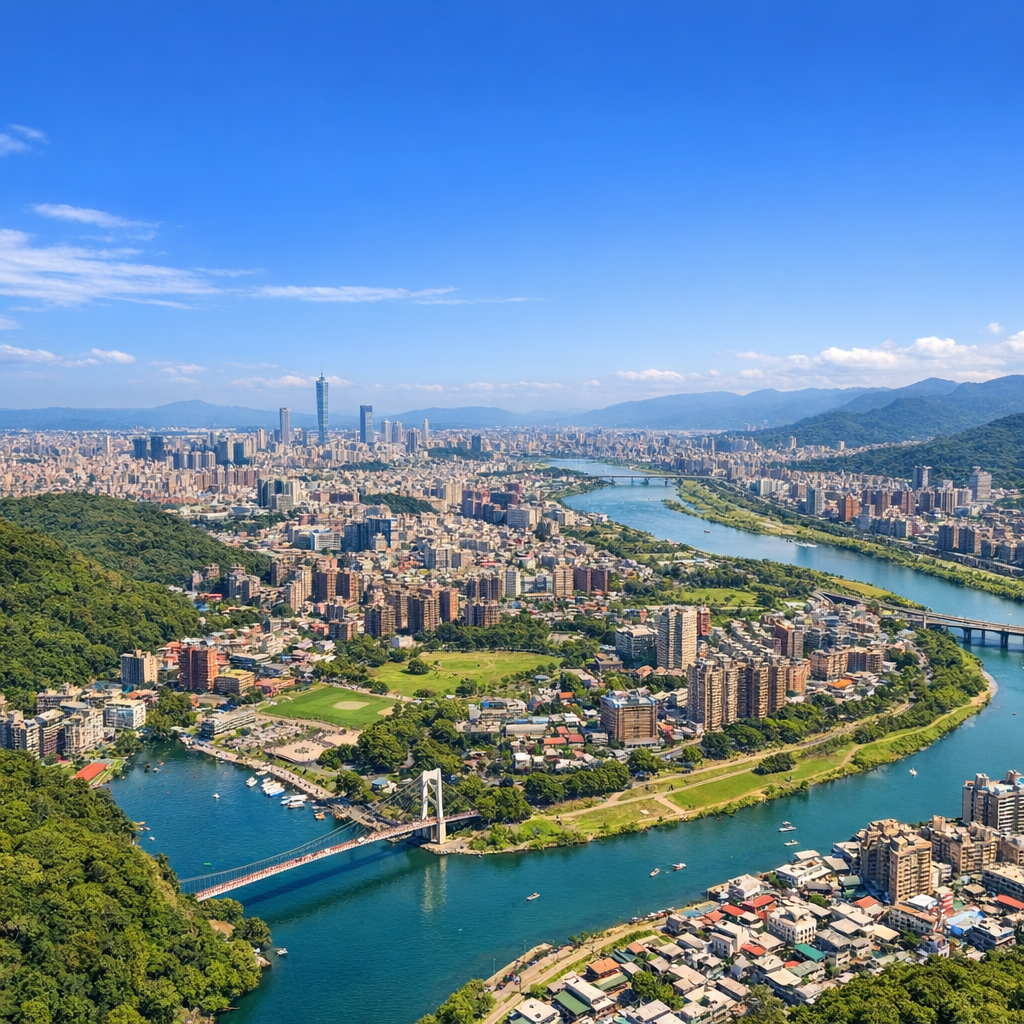
New Taipei City, situated in northern Taiwan, experiences a humid subtropical climate characterized by warm temperatures and significant rainfall throughout the year. The city’s geographical location contributes to its diverse weather patterns, with distinct seasonal variations.
Climate Overview
Throughout the year, New Taipei’s temperatures exhibit moderate fluctuations. The warmest months are July and August, with average high temperatures reaching approximately 34.3°C (93.7°F) and 33.8°C (92.8°F), respectively. Conversely, January is the coolest month, recording an average high of 19.1°C (66.4°F). Nighttime temperatures can drop to around 13.9°C (57°F) during this period.
Rainfall is a prominent feature of New Taipei’s climate, with substantial precipitation occurring each month. September typically experiences the highest average rainfall, measuring about 361mm (14.21 inches), while December sees the lowest, around 73mm (2.87 inches). The city’s average annual relative humidity stands at approximately 76%, peaking in February at over 80%.
Environmental Challenges and Initiatives
As Taiwan’s most populous city, New Taipei faces environmental challenges, particularly concerning air quality and water pollution. The high population density and extensive urbanization contribute to these issues.
To address air pollution, the New Taipei City Government has implemented several measures. The Environmental Protection Department (EPD) has established a 24-hour Environmental Pollution Complaints Center to monitor and control various pollutants. Additionally, the city has introduced sustainable urban transport initiatives to reduce greenhouse gas emissions and improve air quality. These efforts include integrating public transportation with walking and bicycle paths to decrease reliance on private vehicles.
Water pollution is another concern, with construction activities being a significant contributor. In recent years, construction-related discharges accounted for nearly 90% of water pollution violations in Taipei. To combat this, the city has intensified inspections and imposed stricter penalties on violators. Residents are encouraged to report suspected cases through the city’s hotline.
Furthermore, the EPD has been leveraging technology to enhance environmental services. By utilizing data management, AI recognition, and big data integration, the department aims to make environmental protection efforts more immediate and responsive to public needs. These intelligent management strategies focus on resource recycling, pollution inspections, and energy conservation to promote environmental sustainability.
Conclusion
Understanding New Taipei’s climate is essential for residents and visitors to adapt to its weather patterns. Simultaneously, the city’s proactive environmental initiatives demonstrate a commitment to improving air and water quality, ensuring a healthier and more sustainable living environment for all.