

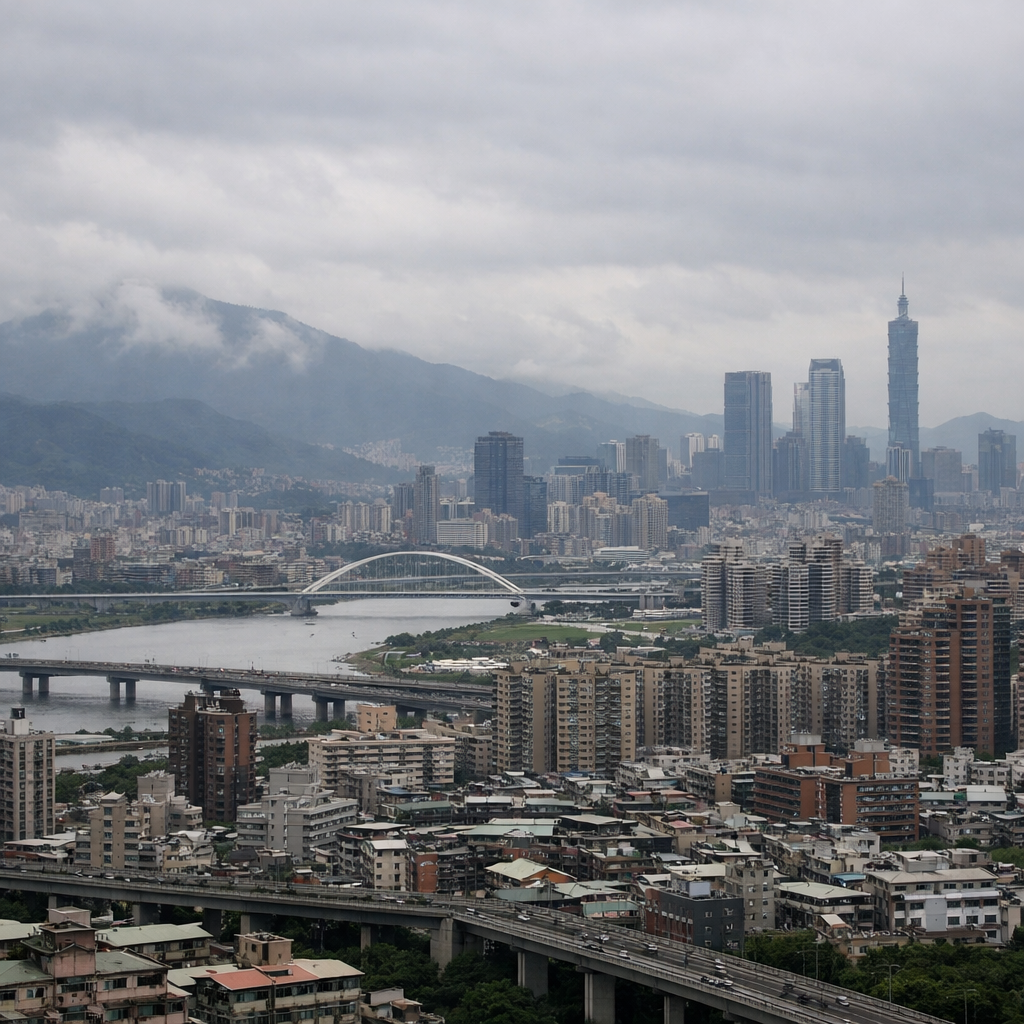
New Taipei City, Taiwan’s most populous metropolis, experiences a humid subtropical climate characterized by high humidity and significant rainfall throughout the year. Understanding these patterns is essential for residents to navigate daily life and environmental challenges effectively.
Seasonal Weather Patterns
New Taipei’s climate features distinct seasonal variations:
Spring (March to May)
Spring brings mild temperatures, with average highs rising from 22.1°C (71.8°F) in March to 32°C (89.6°F) in June. This period is marked by increasing rainfall, providing ample opportunity for outdoor activities before the summer heat sets in.
Summer (June to September)
Summers are hot and humid, with average high temperatures peaking at 34.3°C (93.7°F) in July. This season also sees the highest rainfall, particularly in September, which averages 361mm (14.21 inches). Typhoons are common during this period, bringing heavy rains and strong winds.
Autumn (October to November)
Autumn offers a respite from the summer heat, with temperatures gradually decreasing. Rainfall remains significant but less intense than in summer, making it a comfortable season for outdoor activities.
Winter (December to February)
Winters are short and mild, with average high temperatures around 19.1°C (66.4°F) in January. While snowfall is rare in the city, mountainous areas may experience occasional snow.
Environmental Challenges
New Taipei faces several environmental challenges due to its climate and urbanization:
Air Quality
The city’s high population density and number of motor vehicles contribute to air pollution. The Environmental Protection Department monitors pollutants such as PM10, SOx, NOx, and NMHC, implementing measures to control emissions and improve air quality.
Water Pollution
Construction activities have been a significant source of water pollution, accounting for nearly 90% of violations in recent years. The city has imposed fines and increased inspections to mitigate this issue.
Climate Change Mitigation
To address climate change, New Taipei has established initiatives like the Low-Carbon Community Development Centre and the Climate Change Mitigation and Adaptation Promotion Panel. These efforts aim to reduce greenhouse gas emissions and promote sustainable urban transport.
Conclusion
Understanding New Taipei’s climate and environmental challenges is crucial for residents. By staying informed and participating in local initiatives, we can collectively work towards a more sustainable and resilient city.